
Algeria is home to more than 150 million tonnes siliceous rocks containing more than 97 % of SiO2. This high-purity silica sand meets the most stringent requirements of the glass, foundry and industrial filtration sectors. The deposits are mainly concentrated in the west of the country, particularly in Tlemcen and Mostaganem. Find out about the technical specifications, uses and prices of this strategic resource.
What is silica sand?
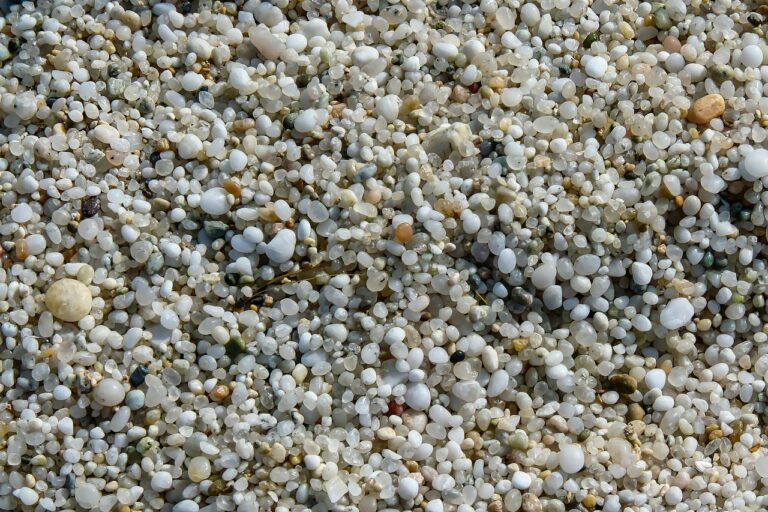
The siliceous sand is formed by the natural weathering of quartz-rich rocks, as a result of erosion and climatic cycles. This geological process releases grains of silica, which are found in abundance in the Earth’s crust.
Unlike ordinary sand, this material is characterised by its high concentration of silicon dioxide, which gives it refractory, chemically inert and mechanically stable properties. These characteristics make it a strategic raw material for many industries.
Algeria has significant deposits, particularly in the west of the country, where Quaternary eolian deposits yield naturally well-graded sand. Silices Santa Cruz extracts and processes these resources directly in Tlemcen to meet the most stringent industrial requirements.
Composition and SiO₂ content
Siliceous sand consists mainly of silicon dioxide (SiO₂), the natural form of silica. To be classified as industrial-grade, sand must contain at least 95 % of SiO₂.
Beyond this basic content, requirements vary depending on the intended application. The glass industry requires particularly high levels, whilst the foundry industry tolerates slightly lower thresholds.
As well as the SiO₂ content, the quality of the sand also depends on its impurity content. The iron oxides (Fe₂O₃) are the ones that require the most monitoring: even in small quantities, they alter the colour and properties of the finished product.
The extracted silica sand also contains small amounts of Al₂O₃, CaO and MgO. Appropriate processing — washing, grinding and magnetic separation — ensures that the purity required by industrial customers is achieved.
The three grades of purity available
Siliceous sand comes in the following varieties: three distinct ranks depending on their SiO₂ content, each of which meets specific industrial requirements.
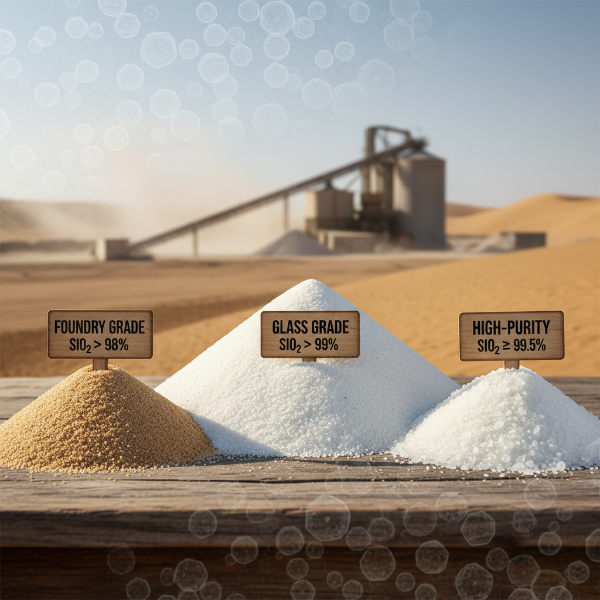
- Foundry grade (SiO₂ > 98 %) : suitable for metals with a high melting point, such as steel. For cast iron and non-ferrous metals, a purity of between 94 and 98 % is sufficient.
- Glass-grade (SiO₂ > 99 %) : required for flat glass, hollow glass and float glass. The Fe₂O₃ content must remain below 0.3 % to maintain transparency.
- High-purity grade (SiO₂ ≥ 99.5 %) : intended for mineral fillers and advanced technical applications. Its price can be four to five times that of the foundry grade.
The high silica content The grade of each sample is a direct result of the treatment applied after extraction.
Industrial uses of silica sand
Glassware, flat glass and hollow glass
The Siliceous sand is the glass industry’s indispensable raw material : there is no substitute for it in this sector. Silica accounts for 70 % of the glass composition and is melted at over 1,000 °C using fluxing agents.
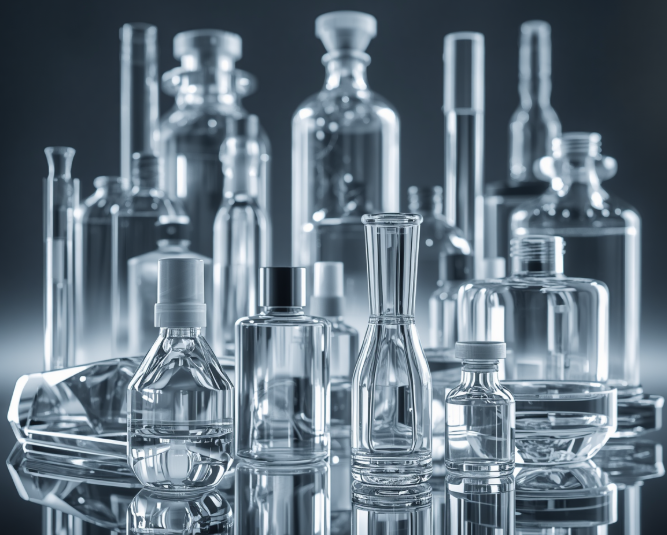
There are two main markets, distinguished by end use:
- Flat glass : glazing for the construction and automotive industries, where maximum transparency is required.
- Hollow glass : bottles, perfume bottles, pharmaceutical packaging and tableware.
In Algeria, these two sectors show significant potential for growth, particularly thanks to the deposits in the west of the country. Local wind-blown sand deposits offer a grain size that is naturally suited to the requirements of glass manufacturers.
Foundry and casting
Siliceous sand is the foundry sand base used in foundries. Its resistance to temperatures in excess of 1,000 °C makes it a refractory material of choice for casting ferrous and non-ferrous metals.
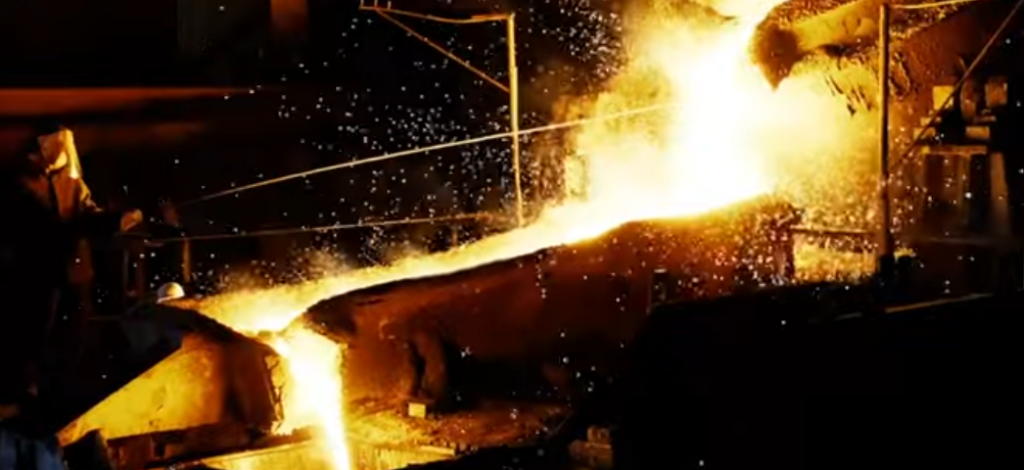
The composition of the sand has a direct impact on the quality of the castings produced. Grain size plays a key role: rounded or sub-rounded grains ensure better permeability, which is essential for the escape of gases during casting.
In practice, silica sand is used in several different processes:
- Green sand casting : a mixture of silica, bentonite and water, widely used for cast iron components
- Chemical-cure moulding : resin-bonded silica, for components weighing from a few grams to 80 tonnes
- The Croning process : silica sand coated with thermosetting resin
In Algeria, Algérienne des Fonderies de Tiaret uses local siliceous sand as the main raw material for its moulds.
Filtration, abrasives and ceramics
The siliceous sand It is widely used in three complementary sectors thanks to its hardness of 7 on the Mohs scale and its remarkable chemical inertness.
For filtration, sand with a SiO₂ content of over 97 % effectively traps contaminants in the treatment columns. It is used in drinking water treatment works as well as in industrial swimming pools and boreholes.
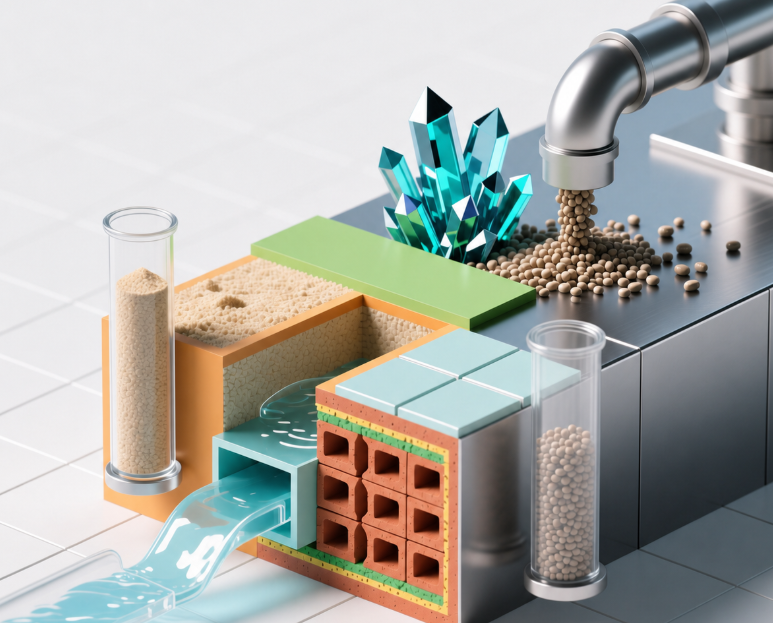
Abrasive applications make use of the controlled particle size distribution Material processing: stripping, polishing and hydro-blasting of metal surfaces require precisely calibrated abrasives.
In ceramics, silica plays a structural role:
- Regulate the thermal expansion of parts during drying
- Stabilise formulations for glazes used on tiles, tableware and sanitaryware
- Strengthen the mechanical strength of high-silica refractory bricks
Where can siliceous sand be found in Algeria?
Western deposits: Tlemcen and Mostaganem
The province of Tlemcen is home to a white silica sand quarry covering an area of 30 hectares. Estimated reserves amount to 7.5 million tonnes, as certified by an independent geological survey.
In Mostaganem, the Fornaka industrial estate — 22 km west of the town — is home to a silica sand processing plant that has been in operation since 2009. Both sites benefit from favourable geological conditions: the Quaternary formations of western Algeria yield sands that high SiO₂ content, which can be used directly in glassmaking and foundries.
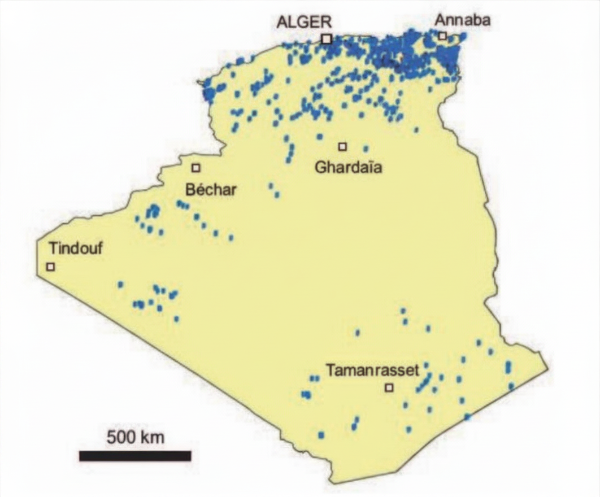
It was in fact from Tlemcen that Santa Cruz Silica extracts and processes its raw materials at the heart of these strategic deposits in the west of the country.
National reserves and geological potential
Nationwide, the known geological reserves in the north of the country amount to considerable volumes. There are more than 150 million tonnes of siliceous rock containing over 97 % of SiO₂, in addition to more than 100 million tonnes of industrial-grade material with a purity exceeding 90 %.
The diversity of the deposits further enhances this potential. Algeria’s subsoil contains several exploitable forms of silica:
- Quaternary sand deposits : the most common form, particularly in the west
- Quartz sandstone and quartzite : found in the northern sedimentary basins
- Quartz fibres : associated with geological basement zones
This potential remains largely under-utilised. The processing of Algerian silica sand, particularly for photovoltaic glass, is now attracting international investors — proof that this local raw material meets global industrial standards.
Careers in mining operations and management
The Algerian mining register lists 53 active mining licences for silica sand, comprising 51 mining licences and 2 exploration licences, spread across 22 wilayas.
On the ground, 14 open-cast quarries are currently in operation. They involve 11 investors — 8 private and 3 public — spread across wilayas such as Souk Ahras, Tébessa, Djelfa, Tipaza, Relizane and Mascara.
Domestic production reached 498,035 tonnes in 2008, of which 68.4 % were provided by the private sector. This figure illustrates the growing influence of independent operators in this market.
The extracted materials are primarily used in the glass and cement industries, but also in ceramics, foundries and abrasives. Santa Cruz Silica operates from Tlemcen within this structured regulatory framework, holding a valid operating licence.
Quality and technical specifications
Requirements for glassware (SiO₂ > 99 %)
In glassmaking, there is no room for compromise when it comes to the purity of the sand. The SiO₂ content must exceed 99 % for white glass, with an Fe₂O₃ content of less than 0.03 % — as the iron oxides released during melting colour the glass and reduce its transparency.
Requirements vary depending on the finished product. Coloured glass can accommodate an SiO₂ content of over 98.5 % and an Fe₂O₃ content of less than 0.2 %. For glass wool, the threshold is reduced to 98 % SiO₂ with Fe₂O₃ below 0.3 %.
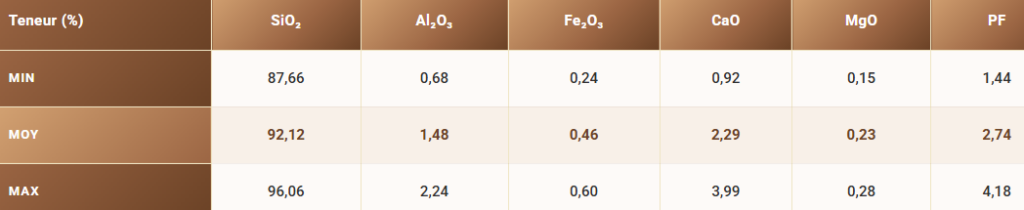
Please note: There is no substitute for silica sand in glass manufacturing. Particle size also plays a key role — glass-making sand must not exceed 2.5 % of residual moisture after treatment.
Available particle sizes and packaging
The mechanical screening of sand After washing, the product yields three distinct categories, each designed for specific applications:
- Fine sand (0.062 to 0.465 mm) : intended for use in glassmaking and as a mineral filler
- Medium sand (0.465 to 2.00 mm) : suitable for foundries and industrial filtration
- Coarse sand (2.00 to 5.00 mm) : for use in construction work and with abrasives only
The medium fraction also feeds into the landscaping and sports grounds : washed and graded to between 0.4 and 0.8 mm, it is used for weighting artificial turf and for top-dressing natural lawns. Details of application rates per m² and prices can be found in our guide to lawn sand.
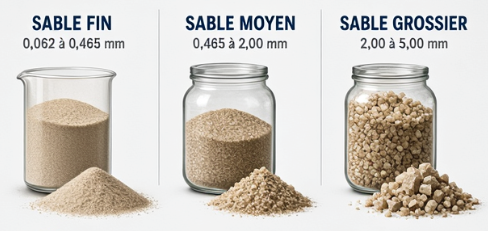
Removing the undesirable fraction during processing ensures a uniform particle size distribution that meets customer specifications.
Silices Santa Cruz offers its sands in wet or dry condition, in accordance with the customer’s industrial process. Packaging is tailored to the quantity ordered: in bulk for large-scale industrial users, 1,000 kg big bags or 25 kg sacks for more specific requirements.
How much does a cubic metre of silica sand cost?
Factors affecting the cost per m³
The price per cubic metre of silica sand is not based on a single factor. Several variables cause it to fluctuate significantly depending on the project and its intended use.
Here are the key factors that determine the final cost :
- Purity and industrial grade : sand used for mineral charges costs four to five times as much as foundry sand
- The extraction site and logistics : the distance between the quarry and the delivery site has a significant impact on the final bill
- The treatment used : washing, grinding and magnetic separation increase the value of the raw material
- The chosen packaging : bulk goods remain cheaper than big bags or sacks
Buy directly from a juice extractor such as Santa Cruz Silica eliminates the need for intermediaries and automatically reduces the cost per cubic metre.
World market prices and value added
On leaving the quarry, The price of raw silica sand does not exceed €25 per tonne on the world market. It is a heavy product that is rarely transported far from where it is mined.
True value is created further down the line. Derivative products reach price levels that are in a league of their own: the silicon carbide whilst it trades at between €1,300 and €1,700 per tonne, colloidal silica is climbing to as much as €7,500 per tonne.
The global market for industrial silica sand was worth $17 billion in 2025, with projected annual growth of 5.7 % until 2035. Demand for high-purity silica for the photovoltaic and semiconductor industries is driving this growth.
Silices Santa Cruz is positioning its processed sands in Tlemcen to capitalise on this high added value right from the purification stage.
Outlook: silica and solar energy in Algeria
Algeria aims to 27 % of renewable energy in its electricity mix by 2035. Local silica sand is becoming a strategic asset in achieving this.
The sand of the Algerian desert contains 71 % of silicon — the highest concentration in the world. This wealth is attracting major industrial players: in August 2025, the Chinese group Kibing presented the’Algeria Solar Glass Project, with an annual production capacity of 1.53 million tonnes of solar glass and 3,000 direct jobs.
The stated aim goes beyond mere extraction. The country wants to build an integrated industrial sector, from sand processing through to the manufacture of photovoltaic panels, with a local content rate of 90 %.
Where Can You Buy Silica Sand? Santa Cruz: your supplier of silica sand in Tlemcen
Direct extraction and on-site processing
Santa Cruz Silica operates directly from its El Aricha deposits in Tlemcen. The proximity of the extraction site to the processing plant reduces logistics costs and ensures a fresh supply of raw materials, unspoilt by transport.
The raw sand goes through several of the following processes : desliming, screening, wet grinding, followed by particle size classification. Each stage removes clay and iron impurities to achieve a SiO₂ content of over 98.1 %.
This process, which aims to achieve maximum purity, is carried out entirely on site. The product delivered is therefore inspected, graded and compliant with industry specifications as soon as it leaves the quarry.
Request your personalised quote
Free quote · Response within 24 hours
Need a siliceous sand high quality?
Contact our experts to find a solution tailored to your business and receive your personalised quote as soon as possible.
Request your personalised quote