
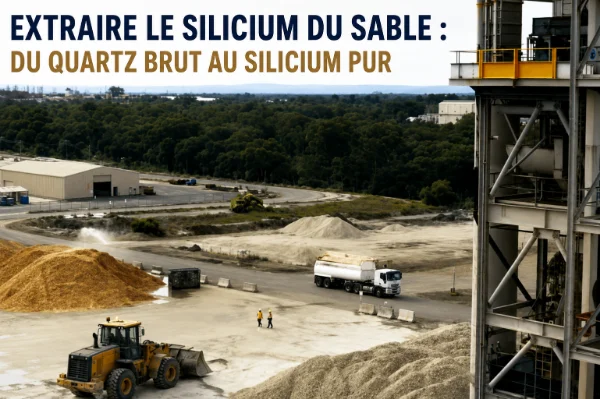
The sand contains silicon dioxide, but not pure silicon. To extract silicon from sand, the industry uses a precise, multi-stage process. First, the quartz is purified by washing and size sorting. Next, an electric arc furnace reduces SiO₂ with carbon at temperatures exceeding 2,000 °C. The molten silicon is then poured into moulds to produce a material suitable for use in solar energy and electronics.
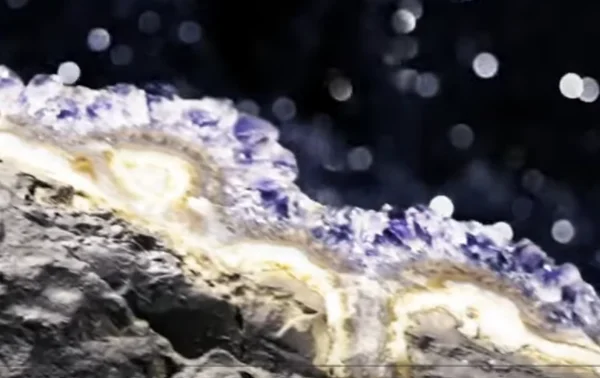
Why does sand contain silicon?
The silica sand contains silicon as it is composed of silicon dioxide, or SiO₂. This compound consists of one silicon atom bonded to two oxygen atoms. Quartz, the dominant mineral in the sand deposits, is precisely this crystalline form of SiO₂.
The origin is geological. Over millions of years, the erosion of granite rocks releases sand particles rich in quartz. These particles naturally accumulate in sedimentary deposits.
Silicon accounts for 27.7 % of the Earth’s crust. It is the second most abundant element after oxygen. However, it is never found in its pure form in nature. The quality of sand depends on its SiO₂ content and the presence of impurities such as iron oxides.
How is silica extracted from sand?
Washing and desilting of silica sand
Washing is the first stage of purification of the siliceous sand. Washing equipment, such as a drum washer, dissolves the clay particles stuck to the grains.
Desludging then removes silt and fine suspended impurities. This process ensures a uniform particle size distribution for the subsequent stages of the treatment plant.
An attrition scrubber enhances this cleaning process for stubborn particles. Consequently, the SiO₂ content rises significantly after this stage.
Hydrocyclones ensure the gravity separation particles according to their density. Sand intended for the glass industry must contain less than 0.02 % of Fe₂O₃ — this is where the purity requirements begin.
Recycling wash water reduces the process’s overall water consumption. Silices Santa Cruz incorporates these best practices into its products right from the process design stage.
Magnetic separation of iron oxides
The wet plate magnetic separator It targets residual Fe₂O₃ directly. It attracts ferromagnetic particles using a strong magnetic field. Quartz, which is non-magnetic, passes through without being retained.
Two technologies are central to this process:
- Low-intensity separators : suitable for strongly magnetic particles such as magnetite.
- The high-gradient magnetic separators (HGMS) : effective on haematite and weakly magnetic iron oxides.
The wet process is used to treat very fine particles. This is why it is ideally suited to silica sand intended for glass manufacturing. Particle size directly determines the choice of magnetic separation equipment. An XRF analysis carried out at a later stage then confirms that the oxides have indeed been reduced.
Flotation and acid leaching
Flotation takes over after magnetic separation. It targets the non-magnetic impurities such as feldspar and mica, which cannot be removed by the previous steps.
Chemical reagents — collectors and foaming agents — attach themselves to the surface of these minerals. Air bubbles carry them to the surface, away from the purified quartz.
Acid leaching is then carried out on the refractory residues. The sand is treated with hydrochloric acid (HCl) or sulphuric acid (H₂SO₄). These acids dissolve iron and aluminium oxides without attacking the SiO₂.
The result is quantifiable: the SiO₂ content exceeds 99 % following this stage. For applications such as solar cells or in the case of semiconductors, this level of purity becomes essential.
What equipment is needed for a treatment plant?
A complete production line comprises several specialised machines. Each piece of equipment performs a specific function within the production line.
Essential equipment for a treatment plant include:
- The jaw crusher : breaks down blocks of rough quartz into manageable pieces
- The vibrating screen : sorts the particles by size before each stage
- The rotary dryer : removes residual moisture after washing
- The PLC system : monitors and automates the entire process in real time
The electric arc furnace is at the heart of the thermal reduction process. It reaches a temperature of around 1,500 °C to convert SiO₂ into molten metallic silicon.
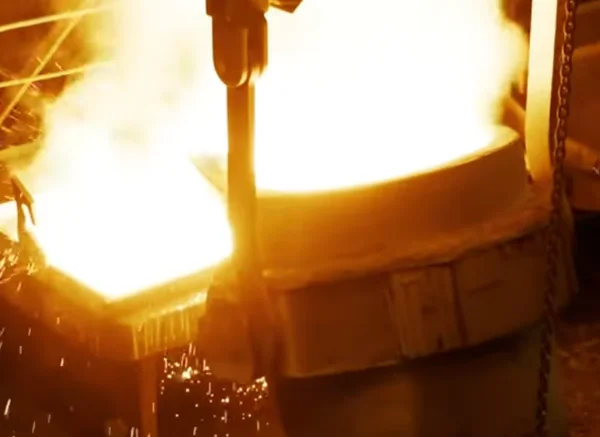
A final XRF analysis verifies the product’s composition. Silice Santa Cruz selects raw materials with a high SiO₂ content to optimise the performance of each piece of equipment right from the start of production.
What level of purity is required, depending on the end use?
Metallurgical silicon and alloys
Metallurgical-grade silicon has a purity of 98 to 99 %. This grade, known as MG-Si, represents the most common use in terms of tonnage on a global scale.
Aluminium-silicon alloys account for the largest share of this. In 2019, this sector accounted for 32 % of global silicon metal production. Consequently, the automotive and aerospace industries rely directly on it to manufacture cylinder heads, pistons and wheel rims.
Ferrosilicon is another major market. This iron-silicon alloy enhances the mechanical strength of special steels. That is why the silicon-aluminium alloys and ferrous metals account for the bulk of global industrial consumption. Silices Santa Cruz supplies high-purity quartz that guarantees MG-Si meeting the requirements of these sectors.
Solar-grade silicon and semiconductors
In addition to metallurgical grade, there are two higher levels of purity. The solar-grade silicon (SoG-Si) has a purity of 99.9999 %. Silicon chips for semiconductors require an even higher purity: 99.9999999 %.
To achieve these levels, metallurgical silicon is converted into trichlorosilane (SiHCl₃) at around 300 °C. This compound is then subjected to fractional distillation, followed by reduction with hydrogen at around 1,000 °C. This is the Siemens process, a leading player in the global industry.
Crystallisation completes the purification process. The Czochralski process draws a single-crystal ingot from a bath of molten silicon at a rate of approximately 1 mm/min. The quality of the starting quartz directly determines the effectiveness of all these stages — which is why Santa Cruz Silica selects raw materials with a very high SiO₂ content.
What is the price of silica sand in Algeria?
On the global market, siliceous sand costs no more than €25 per tonne ex-quarry. The price remains low because the material doesn’t travel far.
Purity makes all the difference to the final price. Sand intended for use as a mineral filler costs four to five times as much as foundry sand.
By-products command much higher prices. Silicon metal is trading at between €850 and €1,200 per tonne, compared with €1,300 to €1,700 per tonne for silicon carbide.
In Algeria, 14 quarries are actively extracting silica sand. The deposits in the west of the country, which are of eolian origin, offer a high-quality raw material. The particle size and SiO₂ content directly determine the price agreed between the producer and the buyer.
Need some silica sand?
Silice Santa Cruz supports you with solutions tailored to your industrial needs.
Request a quoteThe potential of Algerian sand for the silicon industry
Algeria has considerable geological reserves. The north of the country contains more than 150 Mt of siliceous rock with a SiO₂ content of over 97 %.
In 2015, Algerian and Japanese researchers identified a deposit at Sig, in the wilaya of Mascara. This site contains 6 million tonnes of raw silicon, intended primarily for use in photovoltaic panels.
The University of Oran has taken another step forward. Its team has developed a innovative extraction process using Saharan sand and diatomaceous earth, which is less expensive than conventional Siemens technology.
Algeria’s potential has therefore moved beyond the theoretical stage. Laboratory analyses and pilot projects are still needed to confirm its viability on a large industrial scale.